Eating late isn't really the problem — what you eat late is
The link between a late dinner and bad sleep mostly runs through what's on the plate, not the clock.
One mindvestment
If you eat close to bedtime, keep it light and skip the alcohol, caffeine, and heavily processed food rather than treating meal timing alone as the issue
- Costs
- 0 min a day
- Effort
- Low
- Gives you
- Fewer wake-ups and better sleep quality on nights you eat later
- Felt after
- Same night to a few nights
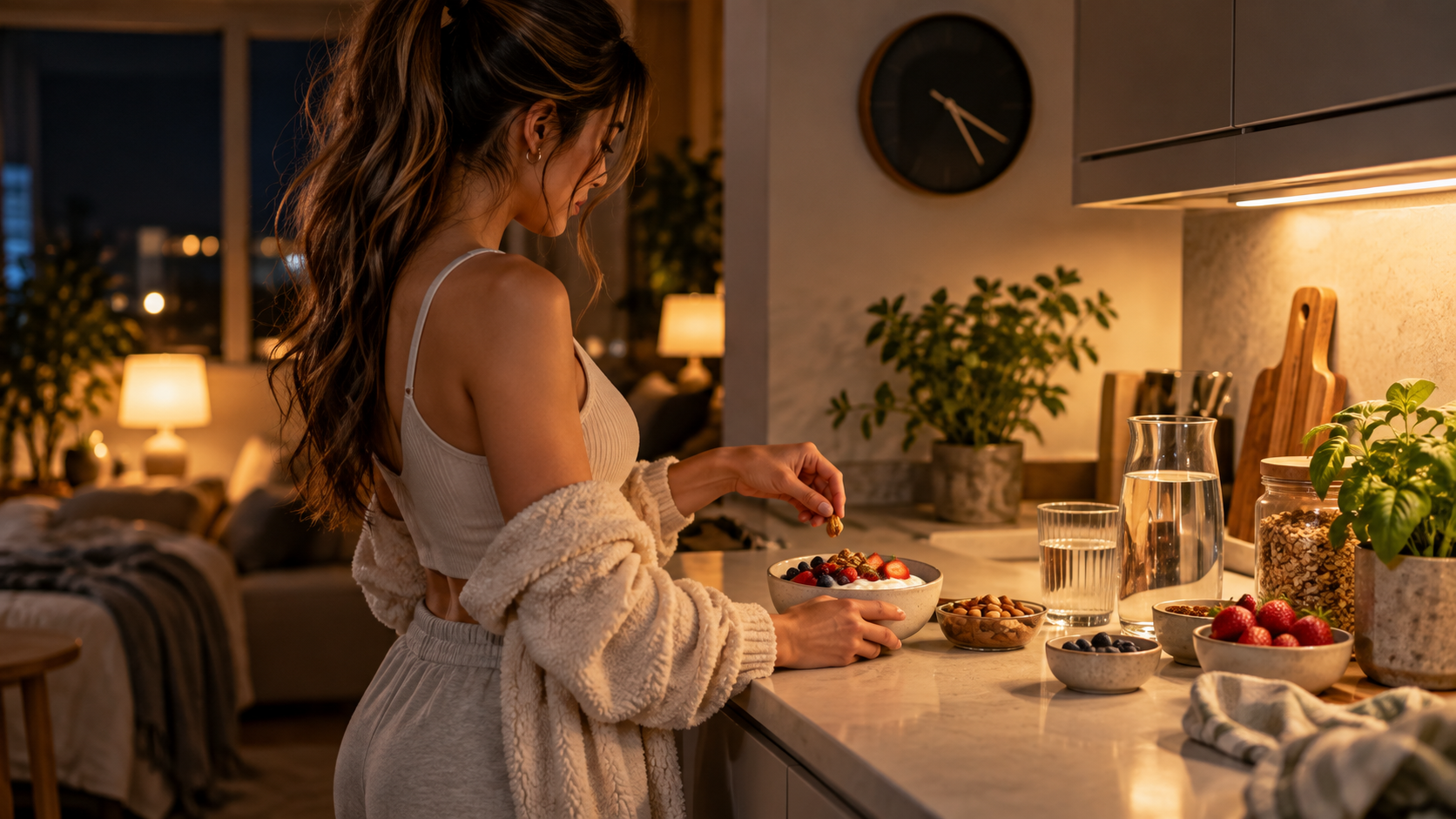
If you’re eating close to bedtime, keep the meal light and skip the alcohol, caffeine, and heavy or ultra-processed food — rather than assuming the timing itself is the whole problem.
Why this works
Large observational studies do find a real association between later meals and worse sleep, and there’s a plausible mechanism: digestion raises core body temperature slightly, and falling asleep depends partly on that temperature dropping, so eating close to bedtime can work against the same process covered in the article on cooling the bedroom. A late meal is also frequently a marker of a generally later, less regular schedule — which independently predicts worse sleep on its own.
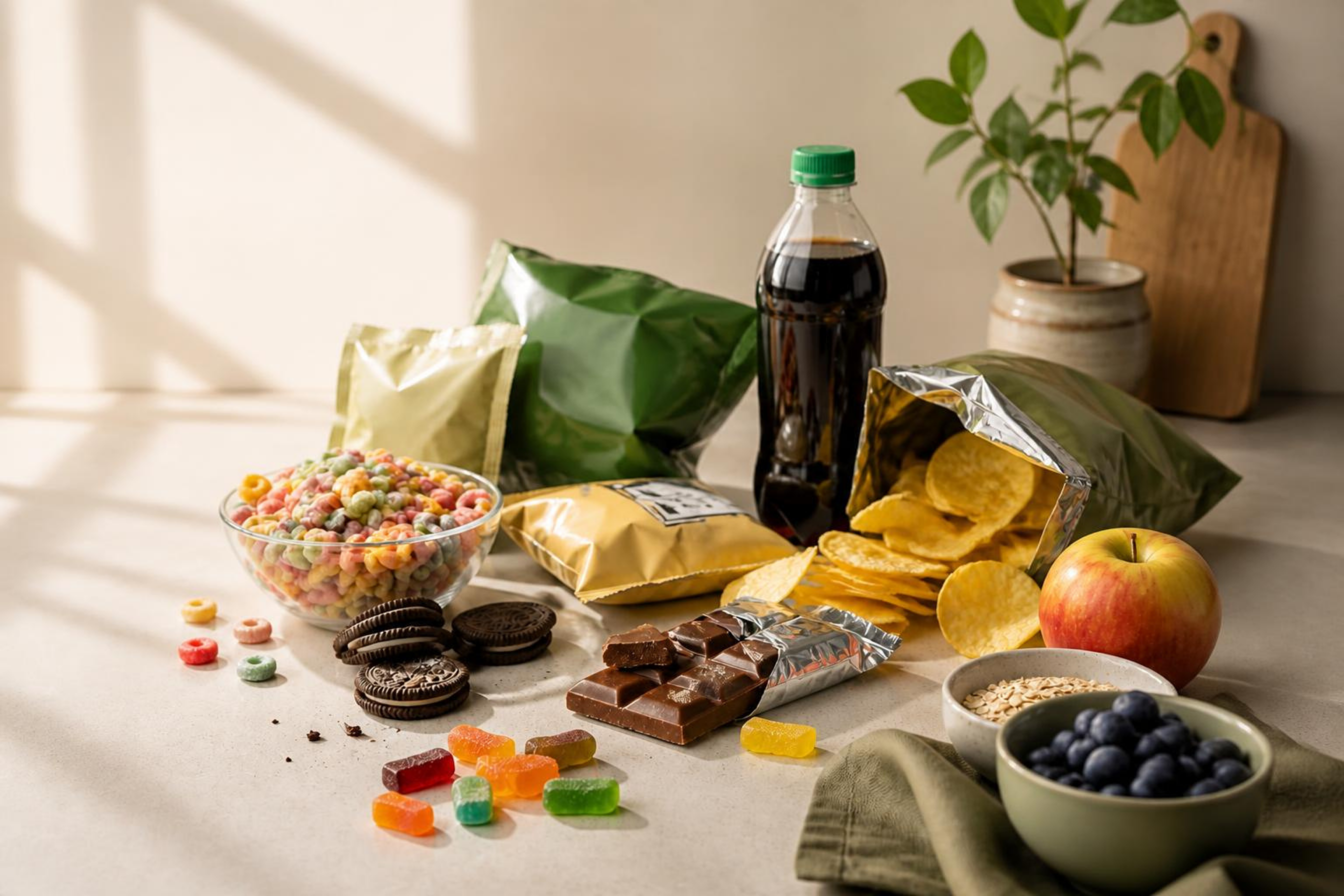
But the more precise recent research complicates the simple “don’t eat late” rule in a useful way. A 2025 study specifically testing this found that the timing of the last meal alone didn’t directly predict sleep quality — what predicted it was what was eaten late: a diet heavy in ultra-processed food, caffeine, and alcohol in the evening. In other words, a late meal of grilled chicken and vegetables and a late meal of chips, a sugary drink, and a nightcap are not the same experiment, and lumping them together is most of why the research on meal timing alone looks inconsistent.
There’s a separate finding worth knowing if late eating is a repeated pattern rather than an occasional one: cohort data tracking meal timing against long-term mortality found the association between very late eating (particularly after 11pm) and higher risk was concentrated in high-energy-density food, and wasn’t present in the same way for lighter, later meals.
How to do it
- If dinner runs late, favour something lighter rather than the largest meal of the day — this is more about volume and composition than a hard clock cutoff.
- Treat alcohol and caffeine as the bigger evening variables to control, not the meal itself — both have their own dedicated, better-evidenced effects on sleep covered elsewhere.
- If you’re hungry close to bedtime, a small, simple snack is a reasonable choice — going to bed genuinely hungry disrupts sleep too, so this isn’t a case for skipping food altogether.
- Keep the meal reasonably far from a workout or intense activity if both happen in the evening, since stacking several arousing inputs close together compounds rather than cancels out.
- Notice your own pattern for a week rather than assuming the rule applies to you exactly as written — some people are genuinely unaffected by a later dinner, provided the food itself is unremarkable.
Common mistakes
- Treating “never eat after 7pm” as a hard rule. The evidence doesn’t support a strict cutoff so much as a caution about what’s being eaten.
- Skipping dinner entirely to avoid eating late. Going to bed hungry has its own well-documented cost to sleep quality.
- Blaming a late dinner when the real culprit was the wine or the coffee that came with it. These get eaten together and are easy to conflate.
- Ignoring a consistently late, heavy, ultra-processed dinner pattern. This is the combination the evidence is actually concerned about, not an occasional late light meal.
What should change
On nights the late meal is light and free of alcohol or late caffeine, expect sleep quality similar to an earlier dinner. On nights it’s heavy, processed, or paired with alcohol, expect the disruption other articles on this site already cover for those specific factors — which is really where the effect is coming from.
Your next step
If evening drinking is part of the pattern, that’s usually the bigger and better-evidenced lever to fix first — read the dedicated article on alcohol and sleep rather than focusing on the clock alone.
Sources (3)
- Chronobiological perspectives, association between meal timing and sleep quality PLOS ONE 2024
- Interplay between evening eating latency and sleep-disturbing diet on sleep quality Journal of Human Nutrition and Dietetics 2025
- Effects of dinner timing on sleep stage distribution Nature and Science of Sleep 2021