What "ultra-processed" actually means, and why it matters
This is one of the few nutrition claims with a real randomized trial behind it — and the mechanism turns out to be about eating speed, not a mystery chemical.
One mindvestment
Build meals around foods you'd recognise the ingredients of, and treat packaged foods with long ingredient lists of industrial additives as the occasional item, not the default
- Costs
- 0 min a day
- Effort
- Medium
- Gives you
- Naturally lower calorie intake without consciously restricting, based on trial evidence rather than association alone
- Felt after
- Noticeable within 1–2 weeks of a genuine shift in default foods
Build most of your meals around foods you’d recognise the ingredients of — and treat the packaged items with long lists of industrial additives as the occasional food, not the default. This is one of the few big claims in nutrition backed by an actual randomized controlled trial rather than association alone.
Why this works
Most nutrition advice about food quality rests on observational data — people who eat more of X tend to have more of Y — which is useful but always vulnerable to the objection that healthier people simply eat differently for a dozen other reasons. Ultra-processed food is a genuine exception. In 2019, researchers at the NIH admitted 20 adults to a metabolic ward for a month and fed them, in random order, two weeks of an ultra-processed diet and two weeks of an unprocessed diet — with both diets matched for calories, sugar, fat, sodium, fibre, and macronutrients on paper, and unlimited food available to eat as much or as little as they wanted. People ate roughly 500 more calories a day, entirely voluntarily, on the ultra-processed diet, and gained weight during those two weeks; they lost weight on the unprocessed diet. A 2025 UK-based trial testing both diets within national dietary guidelines found a similar pattern. This is about as close to causal proof as nutrition science gets.
What makes this useful rather than just alarming is that researchers have started identifying why, and it isn’t about a single dangerous ingredient. Analysis of eating behaviour during the trial found people ate ultra-processed food roughly 50% faster — about 48 calories a minute versus 31 — which matters because eating rate and energy density are two of the most consistently documented drivers of how much people eat before feeling full. Ultra-processed foods tend to be soft, quick to chew, and calorie-dense for their volume, which adds up to eating more of them before the body’s normal fullness signals catch up.
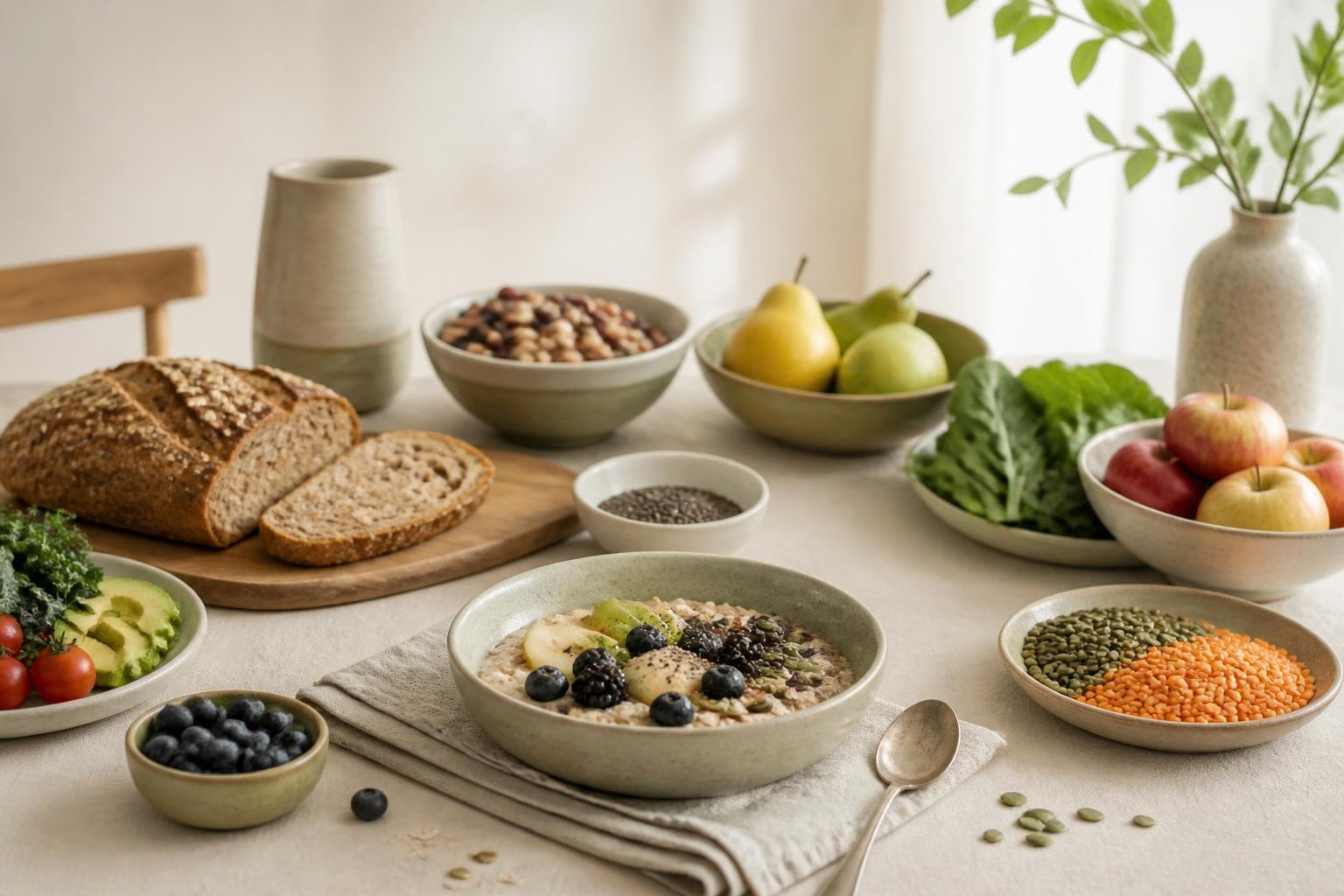
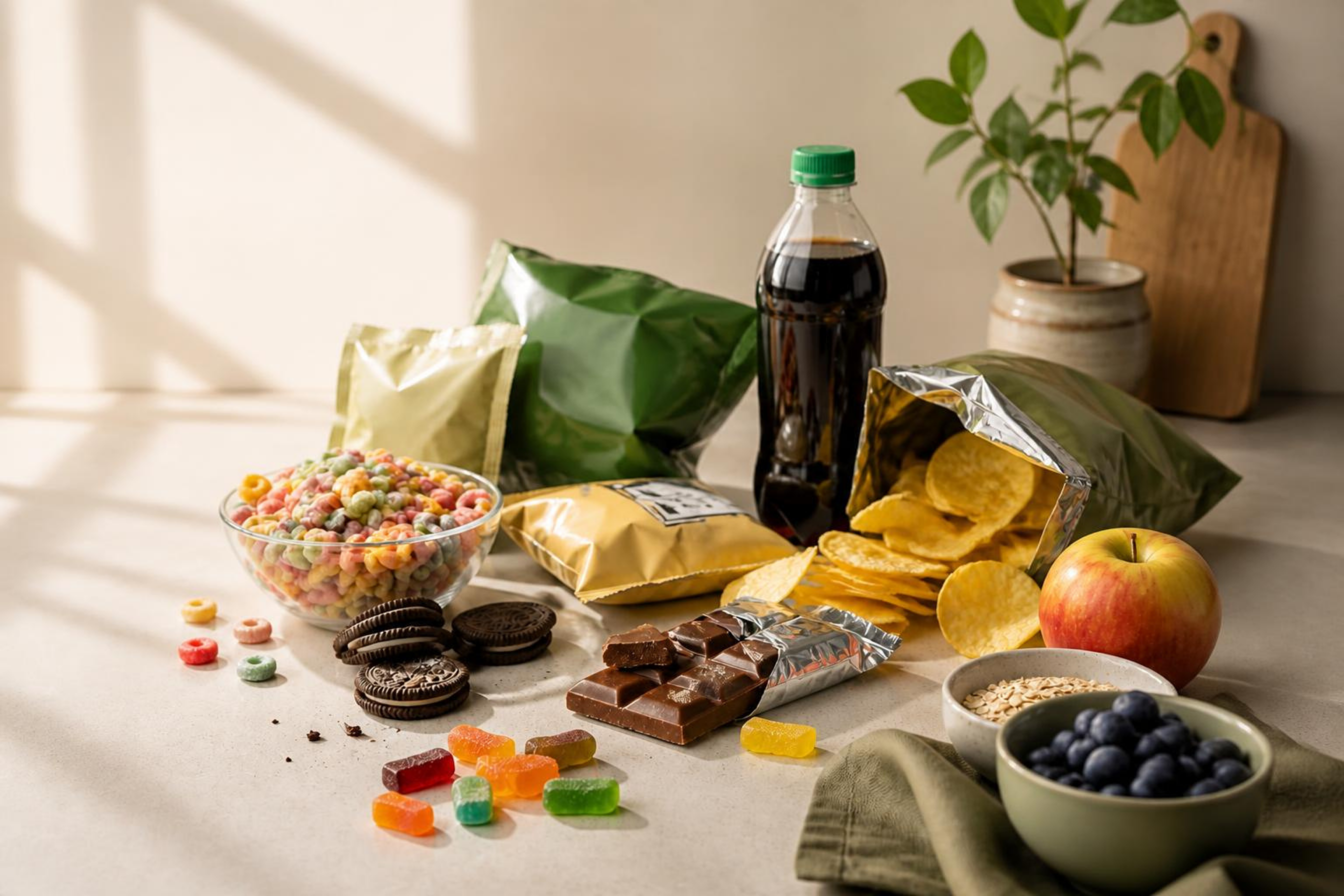
“Ultra-processed,” in the classification system this research uses, specifically means foods built mostly from industrially extracted or synthesised ingredients not found in a home kitchen — things like hydrogenated oils, high-fructose corn syrup, protein isolates, and flavour or texture additives — rather than food that’s simply been cooked, frozen, or canned. Canned beans, frozen vegetables, and wholegrain bread are processed; they aren’t what this research is describing.
How to do it
- Check the ingredient list, not just the nutrition label, on packaged food. A long list including things you wouldn’t have in your kitchen — emulsifiers, hydrogenated oils, isolated protein or starch, artificial flavourings — is the actual signal, not the calorie count.
- Don’t aim for zero. The trial didn’t compare “some” to “none” — it compared a diet dominated by ultra-processed food to one that wasn’t. Shifting the everyday default matters more than eliminating every packaged item.
- Cook simple meals more often than not. This is less about a specific diet and more about spending more of your calories on food built from recognisable ingredients.
- Pay attention to eating speed specifically, since that’s the mechanism the evidence points to — eating more slowly, with foods that require actual chewing, gives your fullness signals time to catch up.
- Treat genuinely convenient, minimally processed options as the realistic middle ground: frozen vegetables, tinned fish, plain yoghurt, and wholegrain bread all keep the “recognisable ingredients” property without requiring everything to be cooked from raw each day.
Common mistakes
- Treating “processed” and “ultra-processed” as the same thing. Most food is processed in some way. The concern here is specifically the industrial, additive-heavy category.
- Chasing a zero-ultra-processed diet as a rule. The evidence supports shifting the balance, not achieving perfection — an occasional packaged item isn’t what the research is warning about.
- Focusing on calories or macros on the label while ignoring the ingredient list. The trial specifically matched both diets for calories and macros, and people still ate more on the ultra-processed one — the effect isn’t fully explained by the numbers on the label.
- Assuming this is really about willpower. The mechanism looks like eating speed and food texture overriding normal fullness cues, not a conscious choice to overeat.
- Ignoring convenience entirely. A realistic, sustainable shift beats an ambitious one that collapses after a stressful week — frozen and tinned minimally processed options exist for exactly this reason.
What should change
If you shift your everyday defaults — what’s normally in the house, not just what you eat occasionally — expect somewhat easier natural portion control within one to two weeks, without consciously restricting anything. This tends to show up first as feeling satisfied on a similar amount of food, rather than as a specific number moving.
Your next step
Pairing this with the fibre article works well, since whole and minimally processed foods are usually where most dietary fibre comes from anyway — the two changes reinforce each other rather than being separate projects.
Sources (3)
- Ultra-processed diets cause excess calorie intake and weight gain, inpatient randomized controlled trial Cell Metabolism 2019
- Ultra-processing or oral processing, eating rate and energy density Physiology & Behavior 2020
- Ultraprocessed or minimally processed diets and cardiometabolic health, randomized crossover trial Nature Medicine 2025