White noise helps with one specific problem, not sleep in general
It works by masking disruptive noise, which means how useful it is depends entirely on how noisy your environment already is.
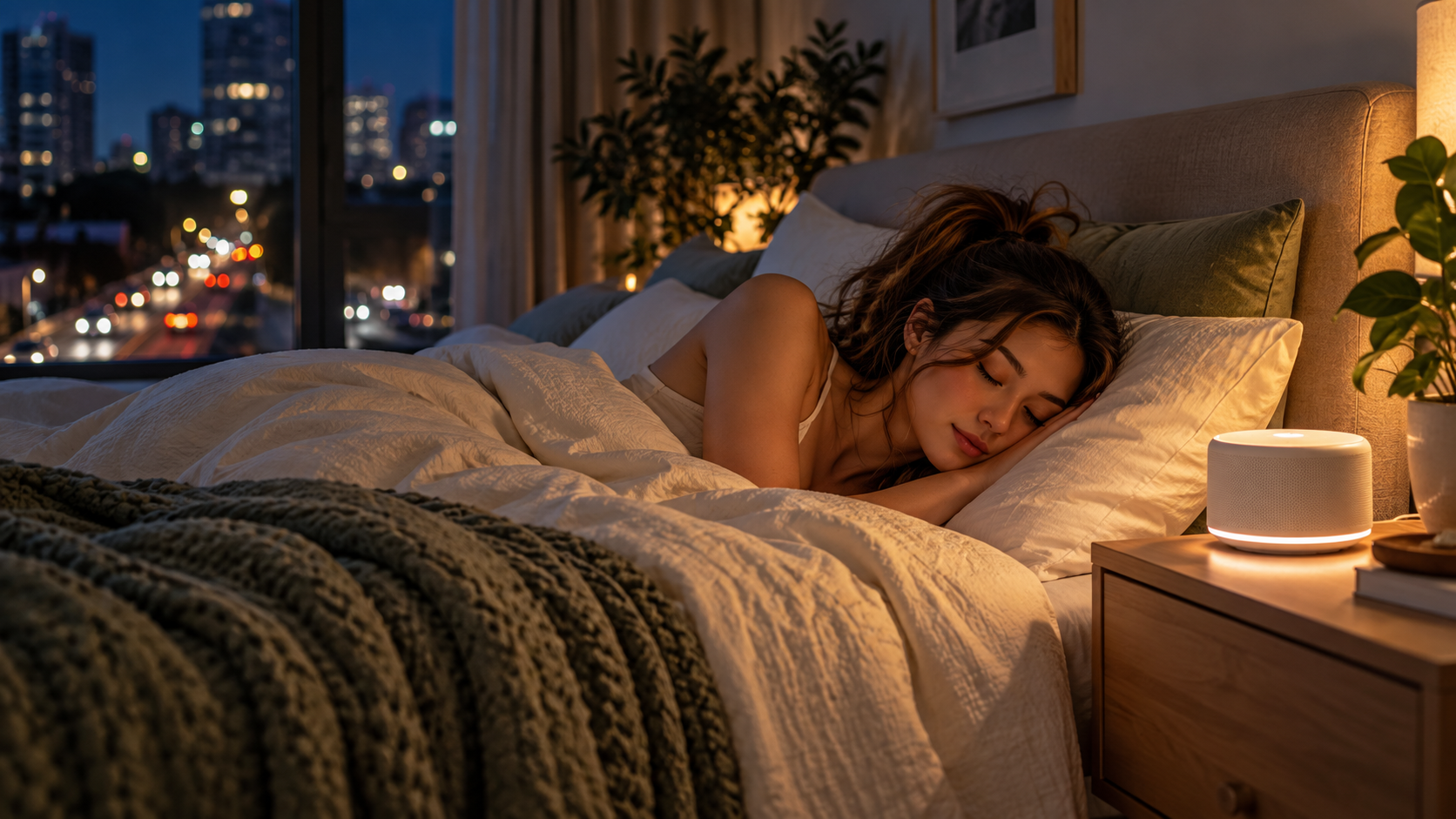
Before you try this. Sound machines can exceed 90 decibels at maximum volume, above safe exposure guidelines. Keep the volume no louder than a quiet conversation and position it away from your head, not directly beside your ear.
One mindvestment
If you live somewhere loud — traffic, a snoring partner, thin walls — try white or pink noise at a low, conversational volume; skip it if your room is already quiet
- Costs
- 0 min a day
- Effort
- Low
- Gives you
- Fewer noise-triggered wake-ups in a loud environment; probably no benefit if your room is already quiet
- Felt after
- Immediate, the first night you try it in a genuinely noisy environment
If you live somewhere genuinely noisy — a busy street, a snoring partner, thin apartment walls — a white or pink noise machine at a low, conversational volume is a reasonable tool worth trying. If your bedroom is already quiet, there’s less reason to expect it will help, and it may be worth skipping.
Why this works
White noise’s main mechanism isn’t some special sleep-inducing property of the sound itself — it’s masking. A steady, broadband sound raises the volume threshold a sudden noise needs to reach before it’s disruptive enough to wake you or shift you into lighter sleep, effectively smoothing out the sharp peaks of a passing car, a door closing, or a partner’s snoring against a flatter, more predictable background.
This is exactly why the evidence looks inconsistent when studies don’t account for how noisy the starting environment was. A systematic review focused broadly on noise as a sleep aid found limited overall benefit, while more targeted research on genuinely disruptive settings — hospital wards, for instance, where unpredictable environmental noise is a well-documented cause of poor sleep — found real improvements in sleep efficiency using white or similar masking noise. The mechanism only has something to work with if there’s disruptive noise to mask in the first place; in a quiet bedroom, there’s comparatively little for it to smooth over.
There’s also a legitimate safety point that gets skipped in most casual advice: consumer white noise machines can reach volumes above 90 decibels at their maximum setting, which exceeds occupational safety guidelines for even a couple of hours of exposure, let alone an entire night. This matters most for infants and children, where continuous exposure at higher volumes has been associated with concerns in developmental research, but the same caution about volume applies to adults using it every night for years.
How to do it
- Honestly assess your actual noise environment first — if you’re not regularly woken or disturbed by outside sound, white noise is solving a problem you may not have.
- If you do live somewhere loud, set the volume no louder than a quiet conversation, and place the device across the room rather than right beside your head.
- Try pink or brown noise as an alternative to pure white noise if the hiss feels harsh — some limited evidence suggests these deeper, less high-frequency-heavy variants are found more pleasant and may be similarly or more effective, though the direct comparative evidence is still preliminary.
- Use it consistently rather than only on bad nights, since part of its value for some people comes from becoming a reliable sleep cue over time, similar to other consistent bedtime routines.
- If it doesn’t seem to help after a couple of weeks in a genuinely noisy environment, it’s reasonable to stop — it doesn’t work for everyone, and there’s no strong evidence it provides benefit beyond noise masking specifically.
Common mistakes
- Using it in an already quiet room expecting a sleep-quality boost. The mechanism is masking disruptive sound, not a general sedative effect — there’s little for it to do in a quiet environment.
- Running it at high volume, especially close to your head. This is where the real, underappreciated downside sits — volumes common on consumer devices can exceed safe long-term exposure levels.
- Using it for a child without checking the volume. The developmental research specifically flags continuous, louder exposure as a concern worth being cautious about in young children.
- Expecting it to fix sleep problems unrelated to noise. If your issue is caffeine timing, stress, or an inconsistent wake time, white noise isn’t addressing the actual cause.
- Assuming a specific noise “color” is definitively best. The comparative research between white, pink, and brown noise is still limited — pick whichever you find least irritating.
What should change
In a genuinely noisy environment, expect fewer noise-triggered wake-ups and less fragmented sleep, often noticeable the very first night. In an already-quiet room, don’t expect much change — that’s a reasonable outcome given the mechanism, not a sign you’re using it wrong.
Your next step
If noise isn’t really your problem and the room itself is the issue, temperature is the more universally useful environmental lever — worth checking the bedroom temperature article if you haven’t already addressed that side of the environment.
Sources (2)
- Noise as a sleep aid, a systematic review Sleep Medicine Reviews 2020
- Impact and efficacy of sound machine on sleep in hospitalized adults, systematic review Sleep Medicine 2025