Snoring that's just snoring, and snoring that isn't
Roughly a third to half of adults snore regularly, and most of it is harmless. A specific set of signs separates ordinary snoring from something worth a doctor's attention.
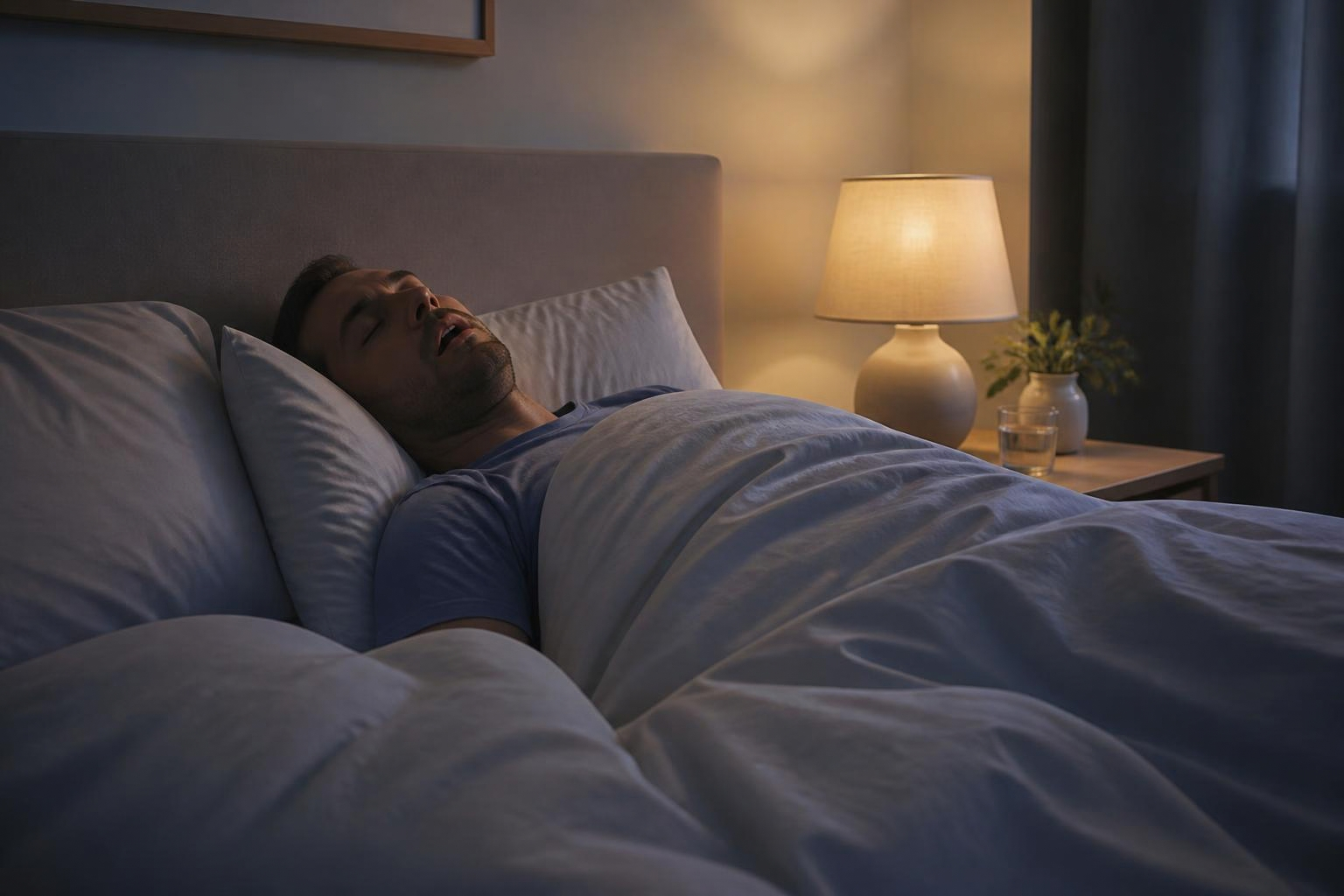
Before you try this. This article is about recognising when to seek a proper evaluation, not about self-diagnosing. Sleep apnea cannot be diagnosed from symptoms alone — it requires a sleep study. If any of the red flags below apply, the right next step is a conversation with a doctor, not trying to resolve it through lifestyle changes alone.
One mindvestment
If snoring is loud and regular, ask a partner specifically whether they've noticed pauses in your breathing, gasping, or choking sounds
- Costs
- 5 min a day
- Effort
- Low
- Gives you
- Either reassurance that it's ordinary snoring, or early identification of a treatable condition with real long-term health stakes
- Felt after
- Immediate — this is about recognising a pattern, not a change that builds over time
If snoring is a regular thing, ask whoever shares your bed a specific question: have they ever noticed you stop breathing, gasp, or choke during the night. That single question does more to separate ordinary snoring from something worth investigating than almost anything else you can check yourself.
Why this works
Roughly a quarter to half of adults snore regularly, and for most of them it’s genuinely harmless — a mechanical sound made by air vibrating relaxed tissue in the throat, often worse with nasal congestion, sleeping on your back, alcohol, or extra weight around the neck. On its own, occasional or even nightly snoring isn’t a medical problem.
The distinction that matters is whether snoring is accompanied by actual pauses in breathing. Obstructive sleep apnea involves the airway repeatedly collapsing during sleep, briefly stopping airflow, dropping blood oxygen, and fragmenting sleep — often without the person waking up enough to remember it happening. Between 80% and 90% of people with sleep apnea do snore, which is why loud, regular snoring is treated clinically as a reasonable prompt to screen further, even though snoring by itself doesn’t diagnose anything. It’s also possible, though less common, to have sleep apnea without much snoring at all.
This matters beyond disrupted sleep. Untreated sleep apnea is linked to meaningfully higher long-term risk of high blood pressure, heart disease, and type 2 diabetes, largely because of the repeated oxygen drops and the stress response that follows them, night after night for years. It’s also substantially underdiagnosed — most estimates suggest a large majority of people with it don’t know they have it, partly because the person snoring is usually asleep for the part that would tip them off.
How to do it
- Ask a partner or anyone who’s shared a room with you directly: have they noticed breathing pauses, gasping, snorting, or choking sounds during your sleep.
- Track your own daytime pattern for a couple of weeks: genuinely excessive daytime sleepiness despite adequate time in bed, morning headaches, or waking up feeling unrefreshed no matter how long you slept are all worth noting alongside snoring.
- Note any of the following alongside snoring, which raise the likelihood a doctor will want to investigate further: high blood pressure that’s hard to control, a thick neck circumference, or a family history of sleep apnea.
- If several of these line up, bring it to a doctor rather than trying home remedies first — sleep apnea can’t be ruled in or out from symptoms alone, and a proper evaluation, usually a sleep study, is the only way to know.
- If it’s just loud, occasional snoring with none of the red flags, reasonable first steps include side-sleeping instead of back-sleeping, reducing evening alcohol, treating nasal congestion, and — if relevant — gradual weight loss, all of which commonly reduce ordinary snoring.
Common mistakes
- Assuming snoring alone means sleep apnea, or that no snoring rules it out. Neither is quite true — snoring is a common clue, not a diagnosis, and a minority of people with sleep apnea don’t snore much.
- Only paying attention to how you feel, not what a partner has observed. The breathing pauses themselves usually happen without the person waking up enough to notice — this is information only someone watching you sleep can reliably provide.
- Trying to self-treat suspected sleep apnea with snoring remedies. Nasal strips, side-sleeping, and similar fixes may reduce the noise without addressing actual breathing pauses underneath it.
- Waiting for it to feel urgent. The cardiovascular and metabolic risks build quietly over years, which is exactly why it’s worth investigating red flags rather than waiting for a crisis.
- Dismissing snoring in a partner or family member without asking about pauses. This is often how the condition goes unrecognised the longest — the person snoring is the one least able to observe it directly.
What should change
Recognising the pattern doesn’t itself fix anything — the value here is knowing whether a proper evaluation is warranted. If a sleep study confirms sleep apnea, treatment (commonly CPAP, an oral appliance, or addressing contributing factors like weight or alcohol) reliably improves symptoms and reduces the associated long-term health risks once in place.
Your next step
If evening alcohol is part of your pattern and snoring is a concern, that’s a genuinely useful lever to test first — alcohol relaxes the airway and is a well-documented contributor to both ordinary snoring and worse sleep apnea severity, covered in more detail in the article on alcohol and sleep.
Sources (2)
- Is it snoring or sleep apnea, clinical guidance Sleep Foundation, reviewed by sleep medicine physicians 2026
- Obstructive sleep apnea, clinical practice guideline American Academy of Sleep Medicine 2017