Five minutes for a tight lower back
For the dull, tired tightness that builds up from sitting — not for sharp or radiating pain, which is a different problem with a different answer.
Before you try this. This is for dull, generalised tightness only. Sharp pain, pain that shoots down a leg, numbness, tingling, or weakness are signs of something a stretching routine isn't the answer to — see a doctor or physiotherapist instead of pushing through it.
One mindvestment
Five minutes of gentle lower-back and hip mobility, done daily
- Costs
- 5 min a day
- Effort
- Low
- Gives you
- Less end-of-day stiffness within days, more comfortable sitting within 1–2 weeks
- Felt after
- 3–14 days
Five minutes, most days, focused on movement rather than a hard static hold. This is specifically for the tired, achy tightness of a day spent sitting — not for sharp or shooting pain, which needs a different response.
Why this works
Most everyday lower-back tightness isn’t damage — it’s a joint and set of muscles that have been held in roughly the same position for hours and have quietly stiffened up as a result, the same adaptive process covered in the hip-stretching article, just in the lower back and the muscles around it instead. The evidence on exercise therapy for ordinary low back pain is genuinely strong, and a consistent finding across trials is that movement, not rest, is what actually helps — a Cochrane review covering this area found exercise therapy reduces pain and improves function better than staying inactive.
The graded B rather than A here reflects a real limitation: research on general exercise for back pain is solid, but the exact five-move sequence below hasn’t itself been tested as a unit — it’s built from movements individually shown to help, combined for a short daily routine, rather than validated as a single protocol.
The mechanism is largely the same as the hip routine: movement through range counteracts positional stiffness far more effectively than a single weekly stretch, because most of what you’re reversing is today’s adaptation to today’s sitting.
The sequence
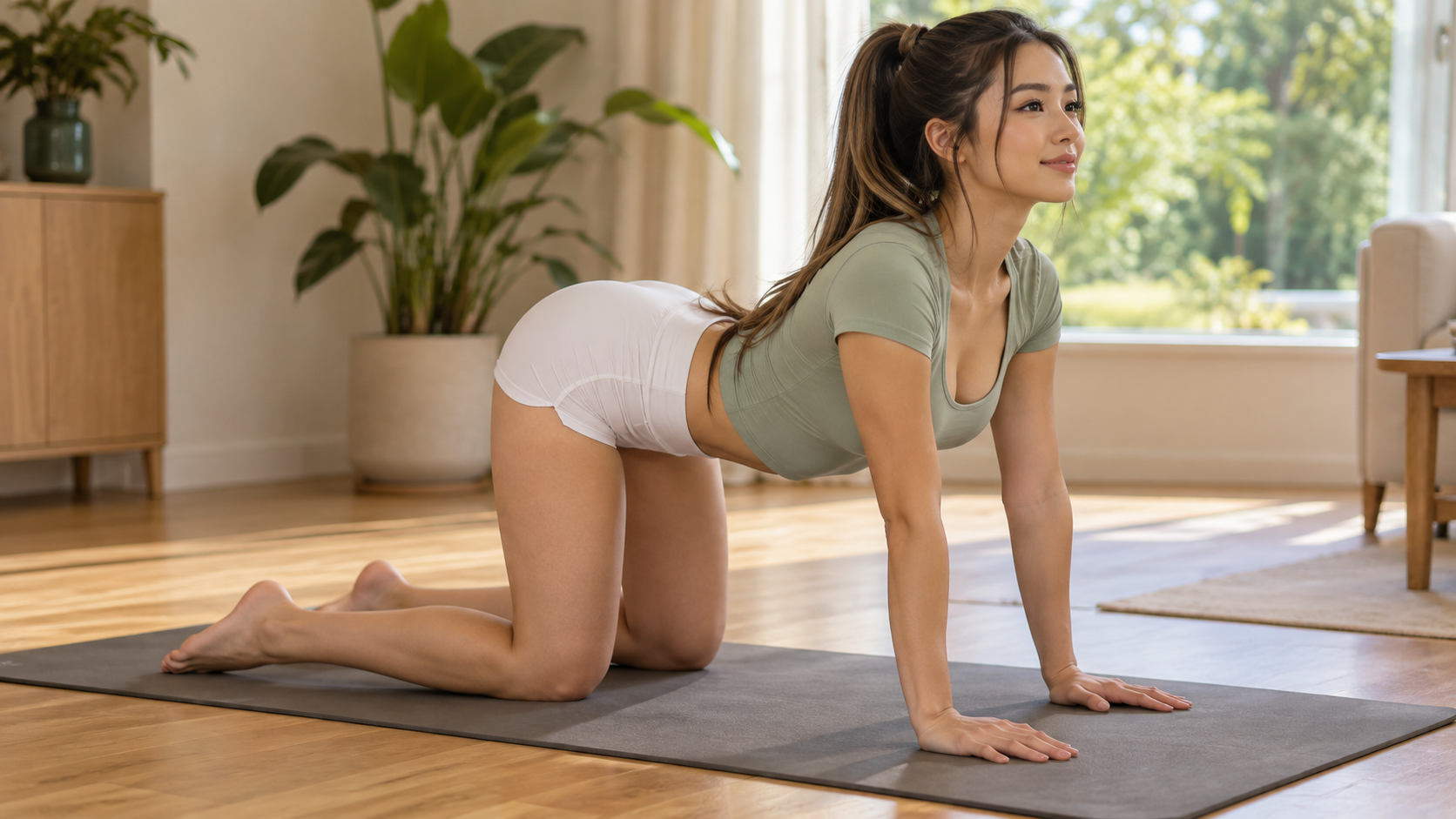
- Cat-cow, slow and controlled, 8–10 reps — the single best movement for lower-back mobility, working the spine through its full range rather than holding one position.
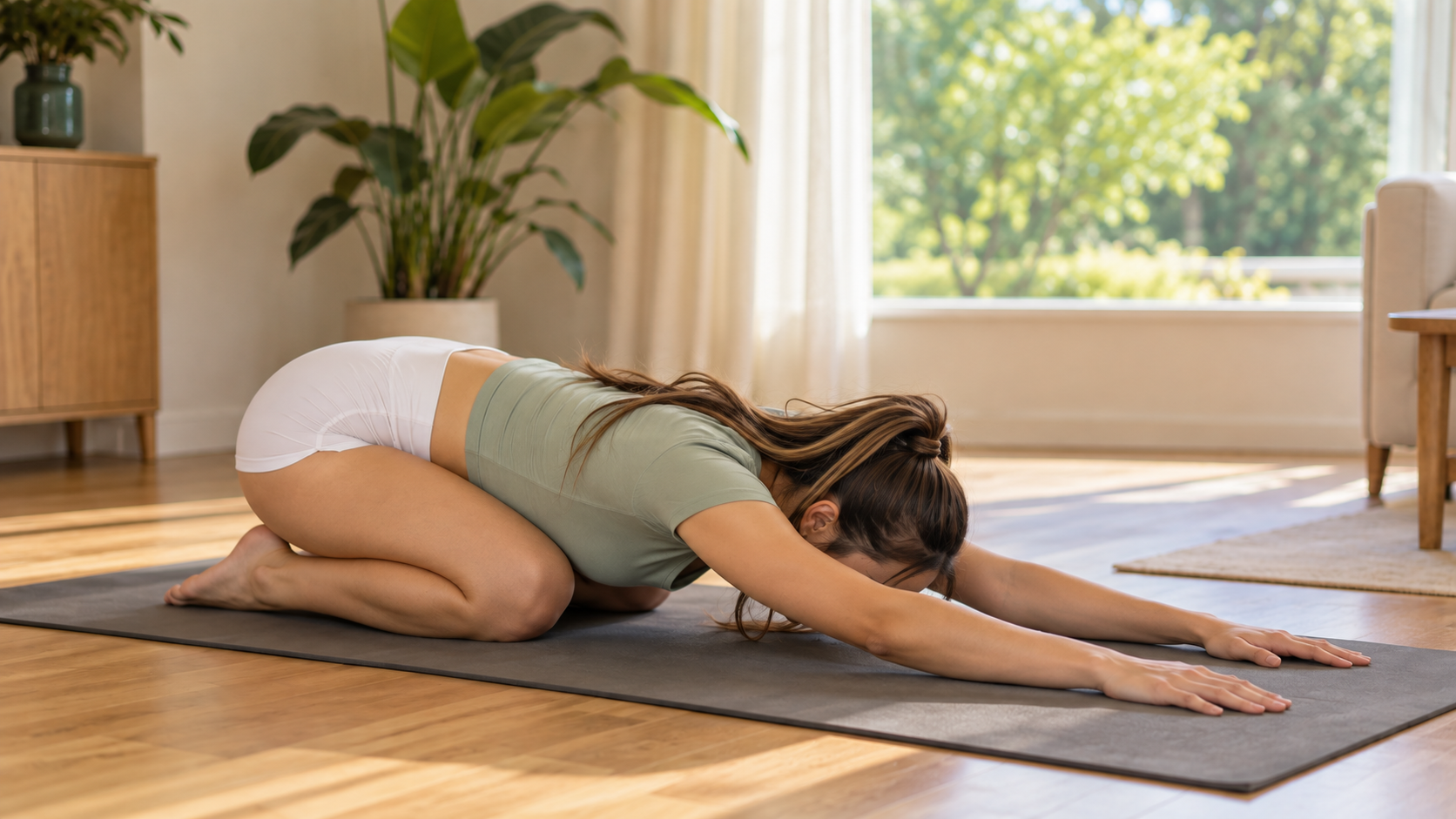
- Child’s pose, 45–60 seconds, breathing into the lower back rather than the chest.
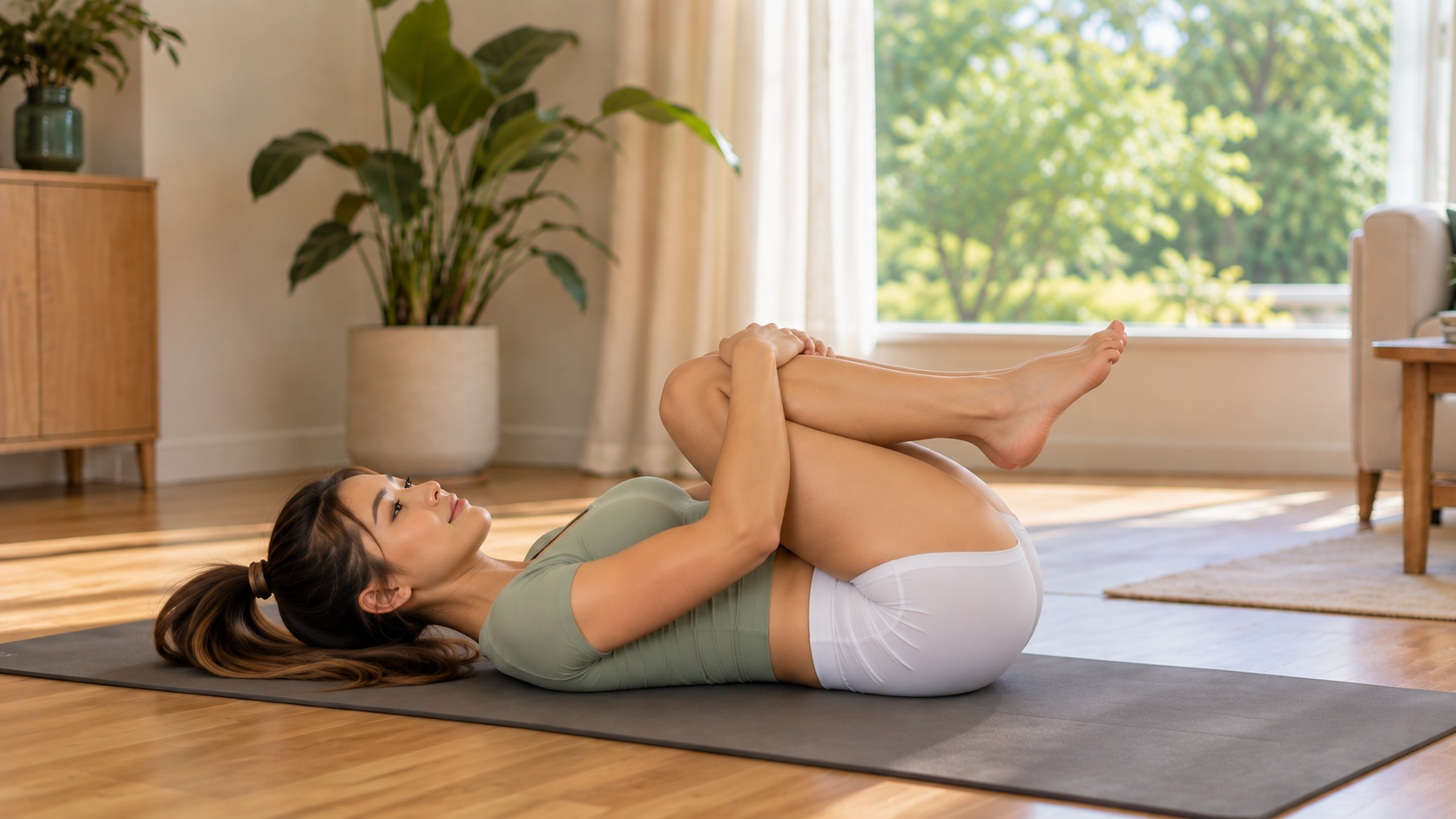
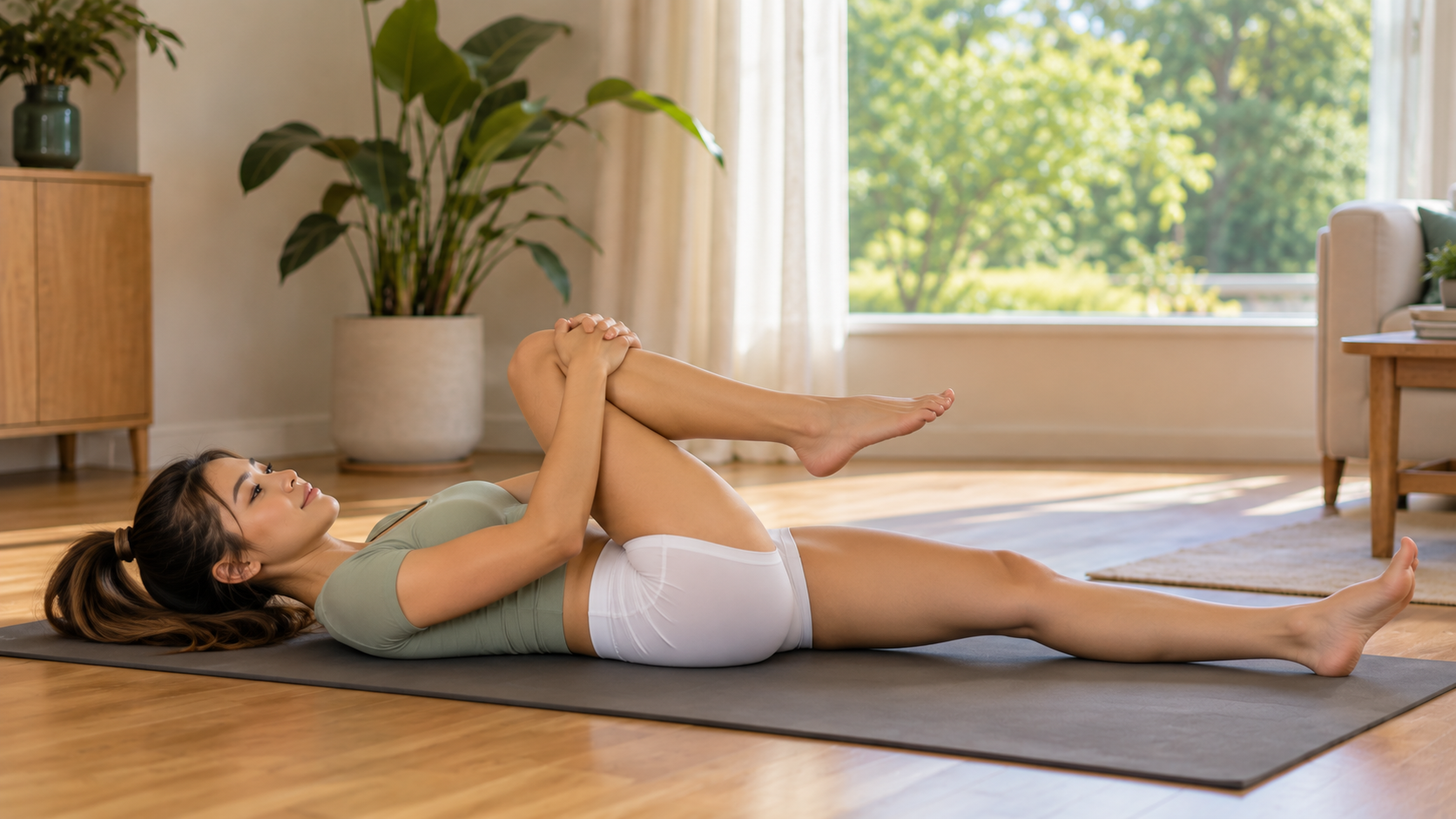
- Knee-to-chest stretch, one leg at a time, 30 seconds each, then both together for 30 seconds.
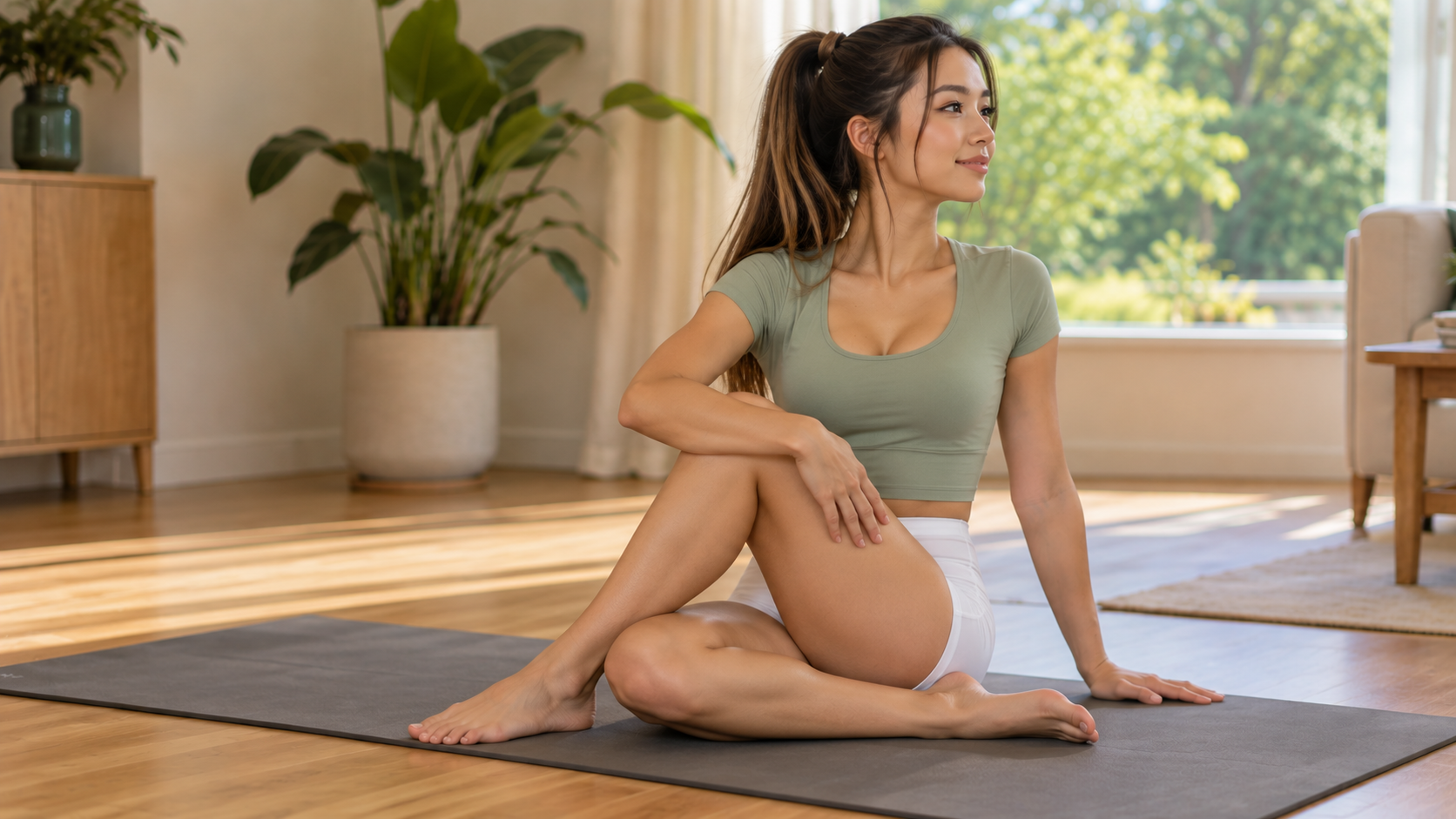
- Seated spinal twist, 30 seconds each side, rotating from the mid-back rather than yanking with the arms.
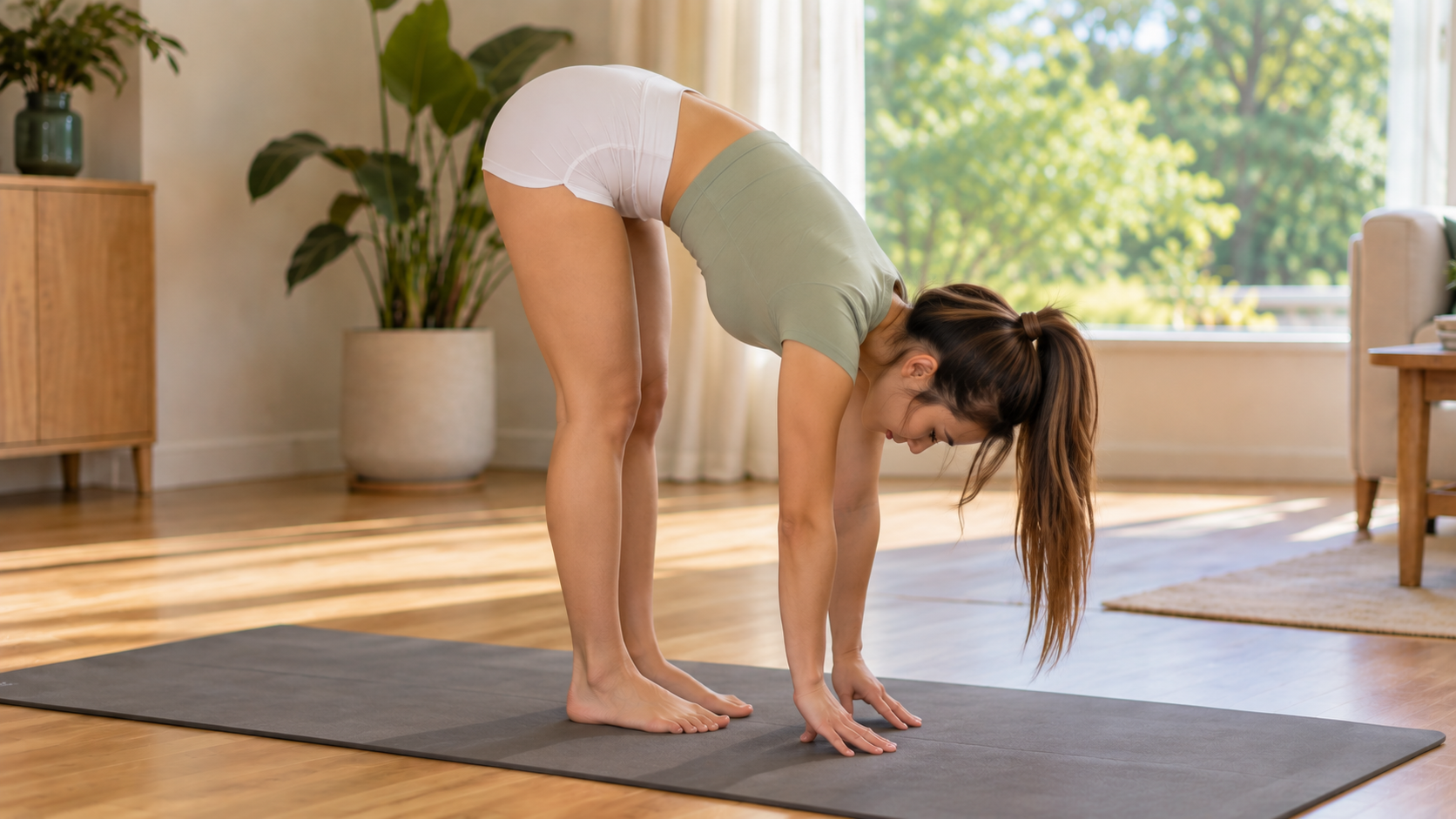
- Standing forward fold, knees soft, hanging for 30–45 seconds, letting the lower back round rather than forcing straight legs.
Common mistakes
- Pushing into sharp pain to “get a deeper stretch.” For the lower back specifically, this is where a genuinely helpful routine turns into a genuinely bad idea. Everything here should feel like release, not strain.
- Only doing static holds, never moving through range. Cat-cow does more for daily stiffness than any held position on this list.
- Treating radiating pain the same as dull tightness. Pain that shoots down a leg, or comes with numbness or tingling, is a different problem — see a professional rather than stretching around it.
- Skipping it on the days it would help most. The days you feel too stiff to bother are usually exactly the days this does the most.
- Doing it once and expecting lasting change. Same as the hips — this maintains today’s range, it doesn’t bank tomorrow’s.
What should change
Expect less end-of-day stiffness within a matter of days, and more comfortable sitting for longer stretches within one to two weeks. If tightness persists unchanged after three weeks of daily practice, or if anything sharp, radiating, numb, or weak shows up at any point, that’s a signal to see a physiotherapist rather than a reason to stretch harder.
Your next step
If most of the day is spent sitting, standing or walking for a few minutes every hour does more for this over a week than the stretching routine alone — the two work best paired, not as alternatives to each other.
Sources (2)
- Exercise therapy for chronic non-specific low back pain, Cochrane review Cochrane Database of Systematic Reviews 2021
- Prolonged sitting and lumbar spine loading, biomechanical study Journal of Biomechanics 2018