The 8-glasses rule isn't backed by research
The number comes from a 1945 recommendation that was misquoted, not a study. Thirst is a better guide than counting.
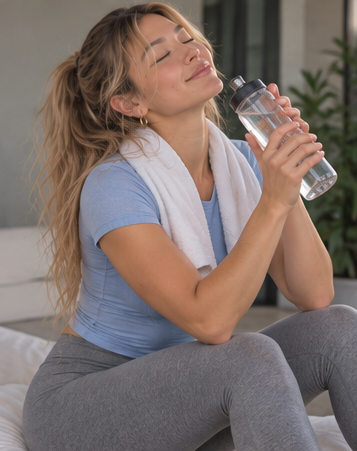
Before you try this. Thirst as a guide works well for most healthy adults but is less reliable in older adults, whose thirst sensation blunts with age, and during illness, hot weather, or intense exercise, where deliberate fluid intake matters more than waiting to feel thirsty.
One mindvestment
Drink to thirst rather than tracking a fixed number of glasses, and count food and other drinks toward your total
- Costs
- 0 min a day
- Effort
- Low
- Gives you
- One less thing to track, with no measurable downside for most healthy adults
- Felt after
- Immediate
Drink when you’re thirsty, and don’t worry about counting glasses. There’s no solid evidence behind the “8 glasses a day” rule specifically, and for most healthy adults, thirst is already a well-functioning guide.
Why this works
The “8 glasses” figure traces back to a 1945 US Food and Nutrition Board recommendation of 2.5 litres of water a day — a number that, even at the time, explicitly included water from food, not just from drinking. That qualifier got dropped somewhere along the way, and a general recommendation that was never based on a specific study calcified into a precise, widely repeated rule that sounds far more scientific than its origin actually is.
Official bodies that have looked at this more carefully generally don’t frame it as a strict daily target. The European Food Safety Authority sets an adequate intake — not a required minimum — of around 2.0 litres a day for women and 2.5 for men, but explicitly includes all beverages and the water content of food in that figure, not drinking water alone. Food typically supplies somewhere around 20–30% of total water intake, more if your diet includes a lot of fruit and vegetables. The US National Academies, after reviewing the evidence, concluded there isn’t enough data to set water intake recommendations based on disease prevention at all — the guidance that exists is about maintaining normal hydration, not a target with proven extra benefits above it.
Thirst itself is a well-tuned signal in healthy adults, regulated by blood concentration and volume with a fair amount of precision. The exceptions are worth knowing: it becomes less reliable in older adults, whose thirst sensation blunts with age, and in situations of heavy sweating, illness, or intense heat, where fluid losses can outpace the urge to drink.
How to do it
- Drink when you’re thirsty. For most healthy adults, this genuinely is the practical guidance, not an oversimplification of it.
- Don’t discount other drinks. Tea, coffee, and milk all count toward hydration — the old idea that caffeine is dehydrating enough to cancel out its own fluid content isn’t well supported at ordinary intake levels.
- Eat your fruit and vegetables. Produce like cucumber, watermelon, and oranges is 85–95% water and contributes meaningfully to total intake.
- In situations where thirst under-signals — heavy exercise, hot weather, illness with fever or vomiting, or if you’re older — drink deliberately rather than waiting to feel thirsty.
- Urine colour is a rough but genuinely useful proxy if you want a check: pale yellow generally indicates adequate hydration, notably dark suggests drinking more is worth doing.
Common mistakes
- Force-drinking water you don’t want because of a number. There’s no established benefit to habitually exceeding what your body is asking for.
- Assuming coffee and tea “don’t count” or work against hydration. At typical intake, they contribute positively to total fluid, not negatively.
- Ignoring thirst in situations where it’s blunted. Older age, fever, and heavy heat exposure are exactly when deliberate intake matters more than usual.
- Treating water intake as a weight-loss lever on its own. There’s some evidence drinking water before a meal can modestly reduce intake at that meal, but it’s a small, situational effect, not a significant driver of weight change.
- Believing skin, energy, or headaches are usually caused by mild under-hydration. These have many more common causes, and chasing a hydration fix for them is often not the right chase.
What should change
Nothing measurable, for most healthy adults — that’s the actual point. If you’ve been mechanically tracking eight glasses out of habit, dropping the count and drinking to thirst should feel like one less thing to manage, with no noticeable downside.
Your next step
If low energy or headaches were the reason you were focused on water intake, sleep timing and caffeine timing are both far better-evidenced places to look next.
Sources (3)
- EFSA Scientific Opinion on dietary reference values for water EFSA Journal 2010
- Nordic Nutrition Recommendations 2023, fluid and water balance chapter Nordic Council of Ministers 2023
- No scientific evidence supports 8x8 rule, water intake review American Journal of Physiology 2002